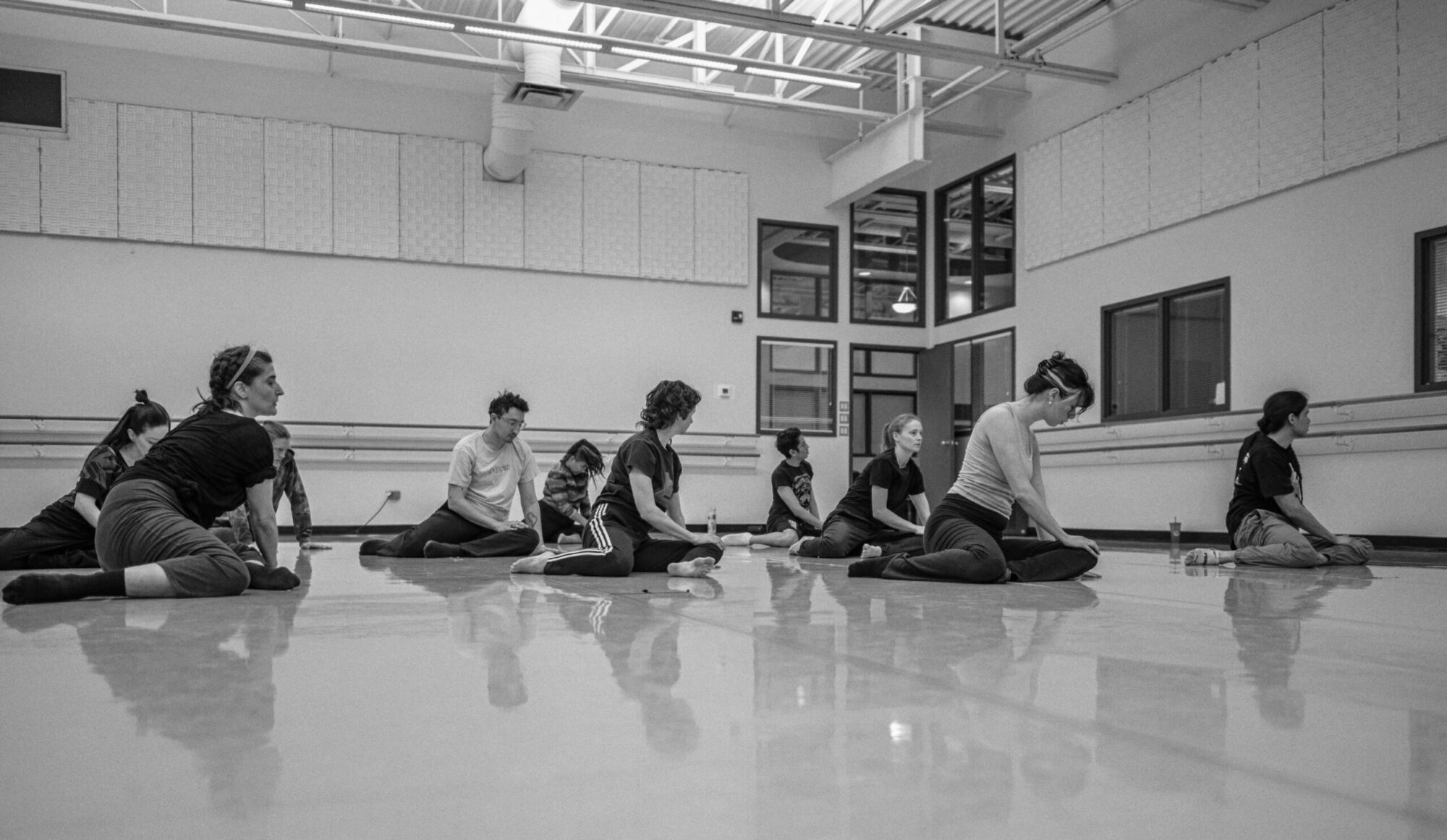

Research Series July 2016-June 2017

(November-January)

with essayists Jillian Groening and Leif Norman

Jaime Black is a Métis multidisciplinary artist based in Winnipeg. Perhaps best known for her pivotal work The REDress Project, an installation project addressing violence against Indigenous women and girls. Jaime’s art practice engages in themes of memory, identity, place and resistance.

Currently Researching…

Jaime’s work is situated in an understanding of the body and the land as sources of historical and cultural knowledge and is centred around themes of memory, identity, place and resistance. She is interested in the body/land as sites of social and political struggle, sites of historical, and collective memory and as vulnerable and often contested spaces. She is interested in the ways in which we can re-establish agency and resilience through interactions between the land and the body.

-=Team=-

Leah Decter is an inter-media artist and scholar currently based in Winnipeg; Treaty 1 territory. Her work focuses on contested spaces, largely contending with histories and contemporary conditions of settler colonialism through a critical white settler lens. Decter’s work has been exhibited, presented and screened widely in Canada and internationally in the US, UK, Australia, Germany, Malta, the Netherlands and India. She holds an MFA in New Media from Transart Institute (Berlin) and is in her final year of a PhD in Cultural Studies at Queens University (Kingston, Canada).

Brenda McLean and Ali Robson                                               Photo by Leif Norman

Brenda McLean is a Winnipeg independent theatre artist, whose focus is on physical theatre performance and design. Recently Brenda has become very interested in Improvisation Dance Movement and Contact Improvisation Dance and how they can be used to create unconventional movement in theatrical performances. Brenda is interested in the combination of Contemporary Dance and Physical Theatre to create hybrid performance techniques with both text and movement. This last summer, she was one of the Choreographers in Company Link summer workshop where they created new choreography everyday with the focus on text and movement with dancers. Brenda is also the founding member of Theatre Incarnate,  www.theatreincarnate.ca and The Talentless Lumps (an all female bouffon troupe).

Currently Researching…

McLean will research with contemporary dancer Ali Robson and mentor Grant Guy, the use of gesture in performance. How does one create gestures, what is gesture, how can it be used as a performance tool, how does one ask or direct gesture work from their performers? Many dancers and actors are asked to generate and create gestures in their performances with little to no training in it, we are going to investigate and train in this technique to better understand how we can use it best as a performance tool.

Lise McMillan, Emily Barker, Rayanna Seymour, Kristy Janvier       Photo by Leif Norman

Kristy Janvier is from a small northern community in Canada called Flin Flon and is of Aboriginal (Dene), Irish, and Ukrainian decent. At the age of 18 she had an opportunity to work abroad as a performer in Japan. From there, her love of acting, dance, movement and exploring began. After two contracts in Tokyo and moving to California, Kristy embarked on two cruise ship contracts in the Caribbean before calling Hong Kong home for 8 years.  While in Hong Kong, Kristy began to search out new forms of movement including yoga, contact improvisation, Gaga and other somatic practices which lead to a Hong Kong-Netherlands exchange of artists and debuting her first choreography credit while working with Korean visual artist Soyoung Lee.  Upon returning Canada, Kristy has travelled to Toronto (Kaha:Wi Dance Theatre) and Vancouver (Raven Spirit Dance) to connect with contemporary Indigenous artists in the country. Her vision is to build bridges between the two worlds and filter this work up North. Inspired by all things in nature, Kristy continues to find new ways of connection and creativity.

Currently Researching…

For Kristy’s research project, the theme is largely based on water looking at it from the views of bloodlines, the rivers through the province that were once the highway systems of our ancestors and what they are now, the fluids in the body and healing rituals for change. Bringing together three other dancers with Indigenous backgrounds to dialogue and explore movement together to create this dance.

Artist Statement: Exploring space without leaving Earth. My feet have carried me to many place and in many ways. Ising the soles of my feet as landing pads, I allow the grace of my breath to move my body throughout the environment. Upon my recent return to Canada, I have to come to explore my ancestral and Indigenous roots to discover how their feet have travelled these lands. Im drawn to elements of nature, incorporating outdoors spaces, Through dance I’m able to step into the shoes that carry one into a world that cannot be expressed with words.

-=Team=-

Performers:

Rayanna Seymour (Hourie) is Anishinaabe from Naongashiing (Big Island), Treaty #3 Territory. Her parent’s are Lorraine Seymour and Raymond Hourie and she has 7 siblings. Today, she is in her second year of law school at Robson Hall, University of Manitoba. Seymour sits on a few Indigenous student groups and works part-time on Anishinaabe nibi Inaakonigewin (water law). Her goal is to continue on in graduate school and become a professor of law one day. One of her favourite activities—besides visiting with nieces and nephews—is dance. She grew up dancing in the pow-wow circle as a fancy shawl dancer, and then started dancing jingle in her teens and has recently picked up her shawl again, so now able to dance both. She also dances Zumba once a week to have some fun and release some stress from studies.

Emily Barker

Lise McMillan

(AUGUST-OCTOBER 2016)

with essayists Praba Pilar and Michel Saint Hilaire


Zorya Arrow                                                                   Photo by Michel Saint Hilaire

ZORYA ARROW is looking forward to developing her new solo work in the Research Series this quarter. A Winnipeg-based dance artist, she holds a BA Honours degree in Dance with a minor in Theatre from the University of Winnipeg. As a graduate of The School of Contemporary Dancers Senior Professional Program Arrow has created over nine original performance works in the dance/theatre scope. Her major dance works have been presented by Nova Dance Collective and as a part of Young Lungs Dance Exchange’s (YLDE) Production Series.

Currently researching:

What are our bodies urges? How clearly do they sit in the body? What does miscommunication between the body and the mind look like, and where can one find clarity between the two? By exploring questions around mind-body connection or lack there of in a psychoanalytical way, one researcher Zorya Arrow aims to develop a movement framework for what will eventually be a seven minute dance piece designed for an alternative audience-performer relationship.

==- Team -==

D-ANNE KUBY [mentor] After 12 years with Winnipeg Contemporary Dancers (1979 -1991) D-Anne has gone on to work as an independent performer, choreographer, video artist, teacher, and rehearsal director. She relocated to Vancouver in 1994 but could only deny her prairie roots for so long. She currently resides in Winnipeg where much, but certainly not all of her dancing is done in the privacy of her living room.


Carol-Ann Bohrn                                                               Photo by Michel Saint Hilaire


CAROL-ANN BOHRN was born and raised in Brandon, MB. She is a graduate of the School of Contemporary Dancers and holds a B.A. Honours degree in Dance from the University of. She has performed work for local choreographers Jolene Bailie, Brett Owen, Ming Hon, Freya Olafson, Odette Heyn, Brenna Klaverkamp, Brent Lott, Alexandra Elliot and Nina Patel. She most recently participated in the Cartae program at aceartinc, where she created her first live piece ‘Eudaimonia’, her first video piece ‘Routine (Mea Culpa)’ as well as a series of digital prints. She will be performing at Fem Fest this September with Gearshifting Performance Works. She is interested in somatic techniques such as Feldenkrais, Alexander, Mitzvah, and meditation.

Currently Researching:

How do our thoughts and our behaviours influence one another? How is it that our actions can be utterly detached from our inner state? Carol-Ann Bohrn is interested in how this performative aspect, over time, can be forgotten or unconscious, and how it can turn into the basis of our identities and sense of self. When does a performance of “happiness” help you to overcome your pain? When does it displace your “authentic” experience further? How are traumatic experiences, depression, and the effects of social emotions like shame, guilt, embarrassment, jealously, envy, empathy, and pride processed in our bodies and in our environment?  These ideas are the launching point for Carol-Ann’s research this fall. It will be articulated with physicality and video work in collaboration with local artist Madeline Rae.

==- Team -==

MADELINE RAE [collaborator]

hannah_g [mentor]


Delf Gravert                                                              Photo by Michel Saint Hilaire

DELF GRAVERT works mainly as an actor, and film photographer, and occasional funk/soul dj.
Most recently, he has finished an experimental film about his mother’s photography premiering at WNDX this year.
Last year, aside from doing a solo photography show at Fleet Galleries, Delf also studied Commedia Dell’Arte and Clown at Dell’Arte International School of Physical Theatre in California as part of the Professional Training Program. In 2014, Delf was honoured to have been a part of No Exit, in the role of Garcin, a theatre research production directed by Tom Stroud. He also devises his own stuff including the The Bike Ride, a physical comedy piece co-created with Leigh Anne Parry.  Wonderful weird times were had in 2013 working with Young Lungs in a production, Encounters of the Mankind, alongside Ian Moyzden and directed by Tanja Woloshen. Delf also really digs learning the ancient art of kung-fu at Ching Wu and it is good because he can always make it there on time as it’s only a block away from his studio.

Currently Researching:

How does a persons environment affect one’s physicality and imagination. Responding primarily with nature, Delf is researching the necessary changes in physicality of say walking on an windswept icy lake in -50 weather, or moving on 4 limbs across an uneven rocky landscape. The seed of the research began in Nunavut with his own responses to landscape through voice, character, costume, and movement studies. How does our environment shape and change who we are, and how must we adapt our way of moving both physically and and with our inner self? The weather, landscape , the sounds we hear, the animals, the people we meet all shaping our reality and imagination, our supposed understanding of ourself.

=- Team -=

RICK SKENE [mentor]


Andrew Henderson and Eroca Nicols                                    Photo by Michel Saint Hilaire

EROCA NICOLS aka Lady Janitor. After earning her Honors BFA in Film/Video/Performance and Sculpture from California College of the Arts (San Francisco, CA), Eroca Nicols’ artistic practice shifted to the body. She studied in professional programs in Canada at both Ballet Creole and The School of Toronto Dance Theatre before pursuing further training in functionally based and improvisational forms. She is currently a Toronto-based but nomadic artist, curator and educator. Her company and alter ego, Lady Janitor, has presented work in Canada, USA, Europe, and the UK. Eroca has performed internationally and is co-founder of the arts advocacy and professional training provider, the Toronto Dance Community Love-In.  Her commitment to community based arts engagement has led her to create platforms for presenting both her own work and the work of fellow makers—DIMBY (Dance In My BackYard) and Badass Dance Fun (a mini festival at Toronto’s Harbourfront Centre) are among these projects, as is the Love-In. Eroca teaches partnering and contemporary dance including workshops in UK, Europe and North America. Her teaching and training are deeply influenced in her continued study of anatomy and biomechanics.

ANDREW HENDERSON aka Glamdrew.

Currently researching:

(to quote the team)

“Oh hieeee,

This is Glamdrew and Lady Janitor and we’re researching a dance piece in Winnipeg, Manitoba. We are -choreographer and mystical nomad, Eroca Nicols (aka Lady Janitor) and -dying, uncelebrated celebrity fashion icon, Andrew Henderson (aka Glamdrew .)

Some important points:

-We have been collaborating together for five years but recently our roles have shifted.

-Two years ago, Andrew was was diagnosed with terminal cancer, and roughly 3 months before that, Eroca got funding to research death rituals and the performance of grief around the world. We are not joking.

-Previous to the diagnosis, Eroca called Andrew “the stage manager of my life” and since being terminal, she has become the co-choreographer of Andrew’s death.

-The timing is obviously epic and has led us both into waves of death positivity, or death obsession, as the psychiatrist refers to it.

-Our current research involves deeply committing to practices of femme adornment, femmeditation and self care, finding ways to talk about death and dying in accessible as well as fantastic ways and developing a living funeral ceremony for the person dying as a performative as well as sacred act.

…It could stop there…

Or continue?

It’s basically fashion art queers working the latest funeral trends, subsisting in rural Manitoba, while developing a living funeral ceremony called Taking it to the Grave, nbd. The show involves the public confessing their sins and/or telling Andrew stories they want taken to the grave and then images from these confessions being live tattooed on his body amidst some mystical fashion, dancing, divination and ghosting. Taking it to the Grave is a ceremony performance on the verge of life and death.

YLDE Research Series showing: aceartinc October 18, I can’t remember the time…

Production run:

Sister Shows…

Taking it to the Grave: October 21, 8pm and October 23, 2 pm

Truthteller: October 22, 8 pm

All at aceartinc…”

=- Team -=

CARLY BOYCE [performer/collaborator]

SUE LAVALEE [mentor]
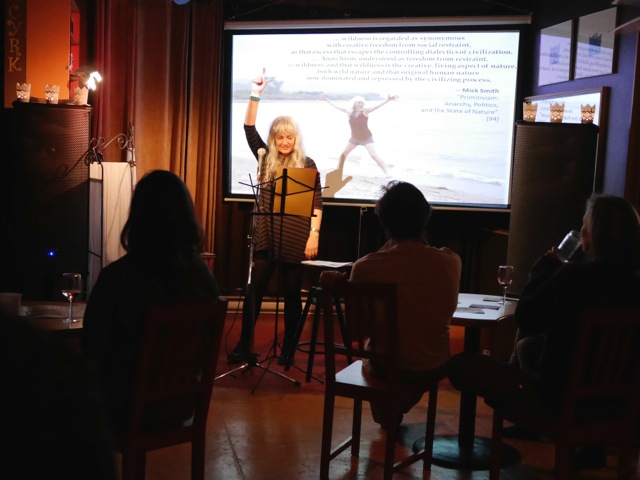
dance, discipline, and the anarchic body; or, how do i get my body to let me take a dance class?

by a. charlie peters

2015-2016 Research Series

how do i get my body to let me take a dance class? this sounds like i’m invested in the mind/body split. I’m not, but i slide into it as readily as the next person born after René Descartes started thinking he is because he thinks he is. some believe that Descartes’s famous seventeenth-century statement, “i think, therefore i am,” founded modernity. right up to the present day, many people regard the mind or brain as the boss of the body. dualisms such as mind/body, man/woman, adult/child, good/evil all feature one term that is privileged over the other term. in the mind/body pairing, the mind is usually the one on top. a friend of ours is writing a play about cryonics. in cryonics, they sometimes freeze whole bodies, but you can also get someone to cut off your head and freeze it after you die so it can get reattached to another body when they’ve figured out how to fix what killed you. that’s how much some people value their bodies, apparently. in my case, though, when it comes to taking dance classes, anyway, it feels like it’s my body that’s calling the shots. it feels like i have an anarchic body, one that doesn’t want a leader or a mind thinking that it’s the boss.

anarchy means “no leader”: this is the literal translation from the Greek. i’ve been in a university environment for much of my life, so i’m used to leaders and to having my mind disciplined by them. for many years, i’ve had professors, advisors, employers, and department chairs telling me what to do. i might not like the hierarchical, top-down structure of so many of our school and work environments, but where the life of the mind is concerned, at any rate, being directed is something i can handle, even enjoy. and my body comes along for the ride.

disciplining my body, though, is a bit different. there are limits to what it’ll put up with. for years, i attended yoga classes, but, with yoga class, you don’t have to be all that disciplined: you can go or not go. it’s not like you have to be at a particular class on a regular basis. and because i have this somewhat hypermobile, disorderly body, yoga teachers would tell me to do the opposite of what they were telling everyone else to do or to do what felt right in my body. so i wasn’t exactly getting bossed around in yoga class. plus, half the time yoga instructors are making exactly the same shapes at the same time as everyone else so it feels like you’re all in it together. and moving to music at home or in a club or in free-style dance classes such as the Isadora Duncan workshop that Jolene Bailie arranged are experiences that i really enjoy. (Isadora freed dance from many of its restrictions, and i learned about her contributions when i was really young, so participating in this workshop was really wonderful thing for me!) no, it wasn’t these experiences that tested my limits; it was when i tried to learn a classical Indian style of dance named Kathak with Ian Mozdzen that my body rebelled.

the Kathak teachers were awesome, the people at the India School of Dance were super nice, and Kathak is super beautiful and interesting, but however much i thought i wanted to learn Kathak, my body just didn’t want to go to the same place at the same time every week and be taught to move with the kind of precision required by a classical dance form. having to move my arms or legs up or down or in or out several inches so as to mimic these ancient postures—however beautiful and charming these postures are—ended up being the proverbial straw, in terms of my physical training. Ian continued with Kathak lessons; in fact, he will be moving to India at the end of summer to learn more about classical Indian dance. and me? i dropped out. and i really wanted to learn Kathak, too.

the Hunger Games series of books and films features Twelve Districts filled with poor people who supply the citizens in the wealthy Capital with all that the well-to-do citizens need to thrive. it’s a lot like the relationship between the body and the mind of a scholarly type person: the body is like the Twelve Districts: it supplies the food and circulates the blood and the oxygen and then it has to just sit there and keep working at supplying the whole body with stuff while the mind—which resembles the wealthy citizens of the Capital—satiates itself with books and films and lectures. in the Hunger Games, because a Thirteenth District had tried to overthrow this unjust system sometime in the past, each of the twelve remaining districts has two of its young people selected to fight to the death in the annual hunger games while the citizens of the Capital get “entertained” by this blood sport. importantly, in each annual hunger game, there is only one winner. eventually, the people in the Twelve Districts rebel, inspired by the heroine, Katniss Everdeen, who refuses to kill all her opponents and become the sole winner of the games. trying to learn Kathak has taught me what i’d only suspected was true from all those years in yoga classes: that my body has a mind—many minds! entire districts!—of its own. perhaps a more egalitarian relationship among all these body-minds and my mind-mind (which no doubt has its own bodies, too) might make it possible for me to take a Kathak class sometime.

and this is precisely what anarchy is all about: egalitarian relationships. anarchy often gets a bad wrap. it’s frequently compared with chaos or nihilism, concepts which no doubt have their up sides, as well, although we seldom hear about them. in fact, Elise and Jasmine Allard, in their performance on January 16th, demonstrated that chaotic movement can be a safe and welcome expression of intense feeling if someone you love is there to catch you. i’ll talk about two separate moments from this performance: in the first, Jasmine holds Elise around the waist while Elise moves her arms and legs intensely; in this first instance, intense movement is enabled by Jasmine’s grasp. in the second of these two moments, Jasmine dances around like crazy until Elise can’t stand it any more and stops her. each sister is the ground that supports the other’s wildness. love both enables and disables chaotic movement.

researching this paper, i learned that contemporary theorists of anarchy embrace wildness and that they are concerned about oppression and the abuses of authority. authority tries to convince us that the few are more forceful than the many. no one in their right mind,—or maybe i should say “in their right body”! or, “in their right body-mind”!—would believe this for long, would they? Isabell Lorey is one of the scholars who is currently theorizing anarchy. Lorey writes about the 2011 Occupy Movement, the writings of philosopher Jacques Ranciére, and the idea that real democracy—by which Lorey means direct democracy, as opposed to representative democracy—is anarchic. what Lorey wants us to do is to practice democracy, real, anarchic democracy, all the time. she calls this “presentist democracy” (59). fill all of our presents, all of our nows, with real, egalitarian democracy, that’s what Lorey advises. And, if democracy is what we actually want, this recommendation makes a lot of sense, for, as literary theorist Jon Clay puts it, “the equality of beings is not imposed … [on us] from ‘above’ … but is rather … [our] own”; it “is assumed among … [ourselves]” (15).

image: Sasha Amaya

Lorey’s recommendation about being present involves having a different kind of relationship with the past and the future, a relationship that is perhaps more distanced, or more occasional. instead of thinking about the past or the future a lot, might we choose, instead, to think about them only when we really need to. rather than “intending” to do a given thing, might we “carry” an idea “with us,” instead? would this be a substantially different way of doing things? how do we “get out of” dwelling in our pasts or in our futures? i think that Brenda McLean and Brittany Thiessen demonstrated a way to do this in a sequence of movements accompanying an apology. during their rehearsal of “Dinner,” a vignette from Caryl Churchill’s Love and Information, Brenda flippantly, insincerely apologizes to Brittany before following this up with a sincere, heartfelt apology. during the flippant apology, Brenda turns her back on Brittany and moves away from her. but during the sincere apology, Brenda wraps her entire body around Brittany, who is seated on the floor. apologizing addresses feelings of guilt, grief, or regret about an event that happened in the past. an insincere apology will keep this past event in play and maintain the distancing effects of estrangement. in contrast, a sincere apology can collapse this distance, assuage troubling emotions, and bring people together in the intimacy of a present moment of reconciliation. and Brenda’s and Brittany’s movements demonstrate how collapsing space collapses time, too. the direction and orientation of their bodies in space encode the temporal dynamics of the sincere and the insincere apology and bring to life the presentist politics recommended by Lorey .

these days politics has been largely reduced to policing people who are barely able to eke out a living (91). this perspective about contemporary politics is associated with thinkers such as Giorgio Agamben and Michel Foucault and it is a perspective that is also shared by a theorist named Mick Smith. while writing about how we might stop dominating what he calls “the more-than-human world,” Smith celebrates wildness. he calls wildness innocent, “ethically anarchic” (92), and “synonymous with creative freedom from social restraint” (94). Smith’s “more-than-human world” played a significant role in classes offered during the Young Lungs Research Series. on January 24th, facilitators Ali Robson, Janelle Hacault, and Sasha Amaya asked those who attended the classes to become sand, water, gulls, and trees! French philosophers Gilles Deleuze and Felix Guattari see all earthlings as interconnected, as assemblages that are always becoming with the things that they—we!—come into contact with. this is true in the most basic and fundamental way. when we eat mushrooms, melons, or mango, we become these plants and they, in turn, become human beings. our interactions makes us assemblages of human and non-human parts. we breathe in what trees exhale—and vice versa! other kinds of becomings took place during these classes, as well. Sasha asked class participants to move around the dance floor with different body parts doing the leading—first the pelvis, then the ribs and the feet—people were even asked to let their bodies be led by more than one body part at once! in becoming-led by pelvis-minds, rib-minds, and feet-minds the leadership of the thinking head was disrupted, although it, too, was given its chance to take the lead! on another occasion, in a rehearsal exercise featuring one person mimicking another person’s everyday gestures, dancers Freya Olafson and Lise McMillan were asked by creator Treasure Waddell to become one another!

these types of exercise ask us to engage in a certain wildness, or in what Mick Smith calls “creative freedom from social restraint.” in this phrase, Smith celebrates freedom along with wildness. i would sure love to celebrate both of these ideas, too. but while celebrating wildness has many fans among anarchists, there are some thinkers, though, who argue, and very convincingly, too, that the concept of freedom is just another tool in the massive toolbox of those who police us. in fact, a theorist by the name of Nikolas Rose argues that governments invented freedom! as Rose explains it, governments convince us that certain behaviours are reasonable and normal. then governments convince us that we freely choose these very behaviours that they have conditioned us to adopt! Rose suggests that we think the way our governments want us to think, including and perhaps especially when we think that we are free. and thinking that we are free when, in fact, we are being highly disciplined and rigidly policed by those who govern us may be one of the biggest problems, in Rose’s point of view, that we moderns face.

Seeing Rachelle Bourget in rehearsal really brought home to me the visual dominance of the thinking head and its companion, the expressive face. for the first part of the rehearsal, i’m sure i spent as much time looking at Rachelle’s face and head as i did observing her dancing body. and even as i write this i realize: there i go, participating in the mind/body split again! i’ll start over. at first, i spent as much time watching the top eighth of Rachelle’s physical form in rehearsal as i did watching the other seven-eighths. then Rachelle wrapped a red scarf over her head and almost everything about my viewing of her movement changed. Rachelle’s head became another part of her moving body, an eighth of her body as opposed to the head of a body. lots of other interesting things became apparent, too: many of her movements were directed sideways; in other words, they were oriented towards the horizontal plane. (poststructural theorists, much like anarchists, are very interested in collapsing hierarchies, and they talk a lot about collapsing them by putting things side-by-side. poststructuralists are all about the horizontal, the lateral, the sideways.) to return to Rachelle’s dance: with her head covered, Rachelle’s limbs—pale in contrast with her black clothing and red scarf—came more into focus and the way she moved one arm as if to fit her elbow into the curve of her waist came to seem like an exercise in self-construction, something i might not have noticed had Rachelle not donned the mask. at the same time, Rachelle’s other arm was angled such that the space between this second arm and her core became a hole that drew my attention to the air within which she moved, air that was shared by everyone else in the place. also, Rachelle’s body made curves where one would not expect them and straight lines where i would never have thought them possible; for instance, at one time, Rachelle’s arm and shoulder were angled in such a way as to point straight down at the floor while the rest of her figure remained erect. i’ve put a slide of the “Russian feminist punk rock protest” (wiki) group Pussy Riot up on the screen because the effect of Rachelle’s dance, on me, anyway, was very political in a horizontal, egalitarian way. the other seven-eighths of our bodies offers so much!

in the introduction to his book Exhausting Dance: Performance and the Politics of Movement, André Lepecki explains that, “Rethinking … [what it means to be human] in terms of the body is precisely the task of [dance] choreography” (5). Lepecki has his criticisms of choreography, however, due to the “commanding voices” of its masters and the extensive discipline it requires of dancers who must nonetheless maintain a posture—and the imposture—of spontaneity (9). Lepecki goes on to talk about how dance is supposed to be all about movement. movement is the ontology or beingness of dance, as, since the Renaissance, at any rate, dance has been understood to be the art form that is all about uninterrupted, unceasing, rhythmic, flowing, movement. modernity, itself—that is to say, the period that stretches from the time of Descartes’s famous statement, “i think therefore i am,” all the way up to the present day—, is said to be all about movement, too, by some theorists; and Lepecki agrees.

but Lepecki is something of a rebel, as well. while he agrees with those who argue that modernity is all about movement and that dance, since the Renaissance, has been all about movement, he rebels against the idea that dance needs to be defined this way, preferring, instead, an expanded definition. Lepecki would have dance appreciated as a dynamic political force that embraces the body’s movement and its stillness, as well as the contributions of the philosophical, theorizing mind. now, what Lepecki says about dance being an art form that is predominantly about movement makes a lot of sense. i wonder, though, about his suggestion that movement is, as he puts it, “the kinetic project of modernity” (my emphasis 3). another way to look at it would be to think of modernity as being about people coming to terms with the fact that everything is always already in motion as well as the fact that the earth isn’t some still point at the centre of the universe, the way many Europeans apparently thought it was before Copernicus. dance, making use of both movement (and relative stillness), may be the art form that can help us the most as we come to terms with the fact that movement and change are the only constants, the only things that don’t change.

Mark Franko is another theorist who is interested in dance’s political contributions. for Franko, dance need not be the traditional, choreographic product of a student who mimics a teacher; it can also be the incorporation or becoming-embodied of the gift of dance. he makes this claim in “Given Moment: Dance and the Event,”a meditation about how dance, post 9/11, can help us come to term with events, especially traumatic events. Franko foregrounds the teaching methods of a Balinese dancer and teacher named Mario who transmits dance moves with his own body by “position[ing] himself behind his pupil whose arms and torso he manipulates into positions” (119). as one pupil puts it, the person being taught is like a tree whose branches are being arranged. Since the dance moves are not being “transmitted across a mediating space of observation and interpretation” (120), Franko characterizes this kind of teaching as a gift. this teaching is the giving of “self-force”; it is “the communication of dance as gift” (120).

The Young Lungs Dance Exchange Research Series has foregrounded the gift of dance and genuine spontaneity, too, particularly in the form of improvisation and collaboration. during her show, Treasure Waddell used improvisation to include the audience in the collaboration. the Research Series was itself an extensive network of collaboration. in fact, i wonder if the degree of collaboration during this Young Lungs Research Series might even address a criticism that some theorists make about gift economies. some theorists suggest gift-giving necessarily creates debt. if you give, there is the expectation that the person you give to will give something back, which is the debt part. in the Young Lungs Series, the creator of one show was a dancer in another and a dancer was also an administrator and on and on! so, in a situation with this degree of collaboration, where people are giving and getting all the time, finding someone who could be experiencing a lack of a reciprocity that could be called debt might actually be quite difficult! there is no doubt in my mind-body district that there were masters of dance involved in the processes of these past months, but the degree of reciprocity among the participants has made hierarchy virtually indiscernible.

collaboration may be another way to think about anarchy. if we (and our body parts) are always taking turns leading the way, are there still people whom we might characterize, in total, as leaders?

theorists of anarchy are frequently theorists of utopia, as well. and, like the word anarchy, the word utopia uses negation to make meaning. whereas anarchy means “no leader,” utopia means “no place.” put another way, the word utopia suggests that there is, in actuality, no fabulously wonderful place, no place in which we all might want to be and become together. but maybe, if we were to practice the kind of presentist democracy that Lorey recommends and if we were to have a revolving leadership such as the one demonstrated in this Research Series, we could have anarchy in both senses—in the dual sense of direct democracy and in the sense that there is no one person who is “the leader”—and maybe we could have utopia, too, here, in this place where we live. which would mean we’d need to coin a new word, a word for utopia achieved. how about the Cree word “ōmatowihk,” which means “in this place”? we could say—here’s a sample sentence—the Young Lungs style of dancing and dance-making is “ōmatowihk,” or the state-formerly-known-as-utopia achieved “in this place.”

oh, and i think i’ve learned a way to get my body to let me take a dance class! maybe i need to stop disciplining my mind quite so much; maybe this way my body can handle a little more discipline!

Co-founder Natasha Torres-Garner introduces a. charlie peters.

Works Cited and Referenced

Franko, Mark. “Given Movement: Dance and the Event.” Of the Presence of the Body: Essays on Dance and Performance Theory. Ed. André Lepecki. Middeltown, CT: Wesleyan UP, 2004. Print.

Lepecki, André. Exhausting Dance: Performance and the Politics of Movement. New York: Rutledge, 2006. University of Winnipeg eBook. 21 Nov. 2014.

Lorey, Isabell. “The 2011 Occupy Movements: Ranciére and the Crisis of Democracy.” Trans. Aileen

Derieg. Theory Culture and Society 31.7/8 (2014): 43-65. SAGE. Web. 22 December 2015, Rose, Nikolas. Powers of Freedom: Reframing Political Thought. Cambridge, UK: Cambridge UP, 1999. Print.

Smith, Mick. “Primitivism: Anarchy, Politics, and the State of Nature.” Against Ecological Soveriegnty: Ethics, Biopolitics, and Saving the Natural World.

WE’RE HIRING

We’re Hiring!

Young Lungs Dance Exchange facilitates a range of projects centered on dance creation and presentation,
and on professional development opportunities for dance professionals. The organization’s
activity caters to the needs of emerging and established creators & performers. It is through
these activities that YLDE supports the growth of performers, choreographers, educators and
the arts community at large.

YLDE is committed to nurturing the beginnings of the creative process when artists are most
engaged in experimentation, research, building new ideas and discovering new collaborations.
YLDE believes that physical expression is a political act, that dancers, makers, thinkers of
dance are contributing to our physical understanding of ourselves and of the world around us,
and that fostering the arts leads to a society with creative problem-solvers, a resource
invaluable to humanity.

See links for details.

MARKETING & COMMUNICATIONS COORDINATOR

ADMINISTRATOR

Please submit a cover letter and resume by August 30, 2018 to Leigh Anne

By email: [email protected]

Or Mail: 306 Edwin St. R3B 0Y6 Winnipeg MB

Young Lungs Dance Exchange Research Series Showings 2017

CLASSES on JAN. 7th ($5/class):

1:30pm- w/ Jaime Black [at Theatre Incarnate 320-70 Albert St.]
3:00pm- w/ Brenda McLean [at Theatre Incarnate 320-70 Albert St.]
4:30pm- w/ Kristy Janvier [at Theatre Incarnate 320-70 Albert St.]

SHOWINGS on JAN 14th ($5/showing):

7:00pm- Jaime Black w/ Lise McMillan [at Rachel Browne Theatre 2-211 Bannatyne Ave.]
8:00pm- Brenda McLean w/ Ali Robson [at Rachel Browne Theatre 2-211 Bannatyne Ave.]
9:00pm- Kristy Janvier w/ Emily Barker, Lise McMillan, Rayanna Seymour [at Rachel Browne Theatre 2-211 Bannatyne Ave.]

ENDNOTE + ROUNDTABLE on JAN 15th (free):

6:00pm- Discussion with Creators, Research Teams, and presentation of two commissioned essays reflecting on the research during this series (one written, one visual). Essayists are Jillian Groening and Leif Norman. [at The Cyrk 254 Young St.]

Faces/Visages by Michel Saint Hilaire

Faces/Visages, exhibition by Michel Saint Hilaire,
January 26th till March 24th, 2017
La Galerie, Centre Culturel Franco-Manitobain,
Opening reception 5pm till 7pm Thursday January 26th

COMMUNITY /// COMPANY LINK: ALTERNATIVE CLASSES

Mitzvah Technique and Itcush Method with Kana Nemoto

8 Weeks – Sundays 11:30am-1:00pm

October 2nd to November 27th, 2016 (No Class October 9th)

University of Winnipeg, Theatre Department Studio 2T15


The Mitzvah Technique and Itcush Method

The Mitzvah Technique and Itcush Method are a new approach for movement and function of the body. Focusing on the alignment and mechanics of the body, we learn to release unnecessary tension and find efficient movement with minimum effort. By learning exercises on the floor, chair and simple movements such as sitting and standing, we allow the body to become more aware of itself and its movement. 


Classes

The classes consist of a series of floor, chair and standing exercises. You will also be introduced to core theories that we use in the Mitzvah Technique and Itcush Method. All the exercises are gentle and suitable for any age and body. The classes are intended for people who like to learn about their body alignment, mechanics, and its movement.


Who should take this class? Performers such as singers, dancers, actors, martial artists, and athletes often find it useful, but anyone who is concerned about their body with injuries or mobility restrictions also can benefit from the work.


Please wear comfortable clothes (sweat pants and shirts) with socks. Since there are lots of releasing exercises, it is recommended to bring sweaters or layers of clothes. 

Cost: $150

Class is subject to minimum enrollment (10 students).

Deadline to register is September 20th, 2016.

To register please contact Ali Robson: [email protected] or 204.990.1551 

BIOGRAPHY – Kana Nemoto

Kana Nemoto, Certified Mitzvah Technique (MT) and Itcush Method (IM) Teacher, was introduced to MT and IM in 1996 by Amelia Itcush (1945-2011). Kana trained as a classical ballet dancer at Kobe Ballet Studio (Kobe, Japan) and Tottori City Ballet (Tottori, Japan). She moved to Canada in 2009 to pursue a teacher training program in Saskatchewan and supplemented her body work training with a M.Sc. study in Kinesiology at the University of Saskatchewan. Kana now resides in Winnipeg as a MT and IM teacher and is actively involved in collaborations with other Mitzvah Teachers such as Toshie Okabe (Toronto), Kathy Morgan (Saskatoon), Ashley Johnson (Regina), and Chihiro Tsubota (Kobe, Japan). She continues to study the movement of the body with MT and IM practice and participating in dance classes and performances throughout Winnipeg.    

For more information about Mitzvah Technique or Itcush Method please contact Kana Nemoto at 204-887-0857 or [email protected].

COMPANY LINK is an organization dedicated to the Experimental Theatre and Dance artist living and working in Winnipeg. Through training, presentation, and forums we support the development of work that is driven by artistic vision and work that resists definition within traditional categories.   

YLDE /// Research Series Classes, Showings, and Roundtable

The news you’ve all been waiting for…! Since August, four research teams have each been working in the studio investigating themes, methods, ideas, questions, approaches related to dance, movement and performance. YLDE is excited to invite the public into their work.

First, come and take a class from each of the creators between Oct. 11-16. Classes are designed by the creators with the intent on sharing and teaching their knowledge of methods they are working with. Then come check out the Showings are an evening of showcasing and discussing their work from the last three months in residence. And lastly, enjoy hospitality and roundtable discussion with artists and essayists about the current research taking place.

Click here to get your tickets online or pay cash at the door.

CLASSES are as follows:

Oct. 11th 6pm-7:30pm – w/ Zorya Arrow  [at Rachel Browne Theatre 2-211 Bannatyne Ave.]

Oct. 13th 6-7:30pm – w/ Carol-Ann Bohrn [at aceartinc. 2-290 Mcdermot Ave.]

Oct. 15th 2-3:30pm – w/ Delf Gravert  [at Rachel Browne Theatre 2-211 Bannatyne Ave.]

Oct. 16th 2-3:30pm – w/ Eroca Nicols + Andrew Henderson  [at Rachel Browne Theatre 2-211 Bannatyne Ave.]

SHOWINGS are as follows:

Oct. 18th 7:00 – Eroca Nicols + Andrew Henderson w/ Carly Boyce [at aceartinc. 2-290 Mcdermot Ave.]

Oct. 29th 7:00 – Delf Gravert  [at Rachel Browne Theatre 2-211 Bannatyne Ave.]

Oct. 29th 8:00 – Carol-Ann Bohrn  [at Rachel Browne Theatre 2-211 Bannatyne Ave.]

Oct. 29th 9:00 – Zorya Arrow  [at Rachel Browne Theatre 2-211 Bannatyne Ave.]

ENDNOTE + ROUNDTABLE (free):

Oct. 30th 6:00pm – Discussion with Creators, Research Teams, and presentation of two commissioned essays reflecting on the research during this series (one written, one visual). Essayists are PRABA PILAR + MICHEL SAINT HILAIRE. [at The Cyrk 254 Young St.] 


COMMUNITY /// Inner Compass

Gearshifting Performance Works is pleased to present
Inner Compass

One performance only!
Sunday, September 18th, 4:00pm
The Rachel Browne Theatre
All seats $15

Choreography: Jolene Bailie

“Bailie is notable for intense concentration, extreme and pertinent gestural economy…. as if hyper-sensitive to the imminence of unseen dangers.” – Michael Crabb, The Dance Current

Dancers: Krista Nicholson, Jillian Groening, Elise Page, Jessica Lepp, Carol-Ann Bohrn, Camila Schujman

With support from the Winnipeg Arts Council and the Manitoba Arts Council.

Tickets available in advance from the artists, or at the door, one hour prior to showtime.

Program includes:
“Hearing the Time” performed by Camila Schujman
“Lost” performed by Carol-Ann Bohrn, Jillian Groening and Elise Page
“Hybrid Human” performed by Jillian Groening, Jessica Lepp and Krista Nicholson

News: A newly evolved trio from the Hybrid Human collection of works is touring to Toronto to perform at the large scale interdisciplinary festival, in/future, in September. We are delighted to share this dance with you before we depart. In Toronto, we will participate in a four hour open public rehearsal and 12 performances. It’s all very exciting! 

www.gearshifting.org

WCD 2016 SUMMER SCHOOL

WINNIPEG’S CONTEMPORARY DANCERS

Rachel Browne Theatre 204-211 Bannatyne Ave

August 22nd to 26th & August 29th September 2nd.

10:00am – Noon Technique with Johanna Riley

1:00pm – 3:00pm Contact Improv with Ali Robson

Full session $175

Technique only $100

Contact Improv $100

Drop In $13/class

Space is limited to 20 participants so register early! Participants include those entering the senior professional program. You can reserve a spot with a $40 deposit and pay the balance on the first day of class.

Cabaret at Femfest

Saturday, Sept. 17th

The Asper Centre for Theatre and Film,
400 Colony Street

$15

Celebrate our opening night with our popular cabaret evening featuring a mix of artists from a variety of disciplines! This incredible variety show is jam-packed with high-energy entertainment. The show offers a unique smorgasbord of entertainment including music, dance, comedy, theatre and film. Followed by a chance to eat, drink and mingle.

Host: Lara Rae, Comedian and Artistic Director of the Winnipeg Comedy Fest
Visual Art displays in the lobby featuring exhibits by Autumn Serb-Crossman, Teresa-Lee Cooke & Debbie Machula.

In the theatre you’ll see:

  • 50/50 – improv-theatre fusion with Robyn Slade & co.
  • Crash Site – a film by Sonya Ballantyne
  • Lost – by contemporary dance company Gearshifting
  • Break the Silence – solo dance by Jennifer Genest
  • Wolf Woman – aerial by Ruth Baines
  • Buzzkill and Tattletale in: You Win Some, You Lose Most
    – by Alissa Watson and Spenser Payne
  • Pearl in the Egg – solo theatre by Raye Anderson
  • Visual art by Susan Aydan Abbott
  • Music by Cassidy Mann